Our Thesis

Why Japan.
Why Now.
Why Us.

The Japan opportunity is structural, not cyclical. Most companies understand this too late — or enter it wrong. Here's how we see it.

01 — Why Japan

The world's most underserved
enterprise market.

Japan is the 3rd largest economy on earth — with enterprise software adoption running a decade behind the West. That gap is not a headwind. It's the opportunity.

#3
Economy globally by GDP at $4.2 trillion — larger than Germany and the UK
Structural weight
$115B
Japan IT market size — 3rd globally, ahead of Germany and France combined
Real scale
18%
Enterprise SaaS CAGR in Japan 2024–2028 — fastest acceleration in the G7
Late = steep curve
12%
Current SaaS penetration in Japanese enterprise — versus 45% in the United States
The gap is closing fast
70%
Foreign company Japan entries that fail in year 2 without local expertise
Entry matters most
$2.9T
ESG assets under management in Japan — 3rd globally, growing 40% per year
Sustainability = mandate
Enterprise SaaS Adoption Rate — G7 Countries (2024 est.)
🇺🇸 USA
45%
45%
🇬🇧 UK
35%
35%
🇩🇪 Germany
28%
28%
🇨🇦 Canada
25%
25%
🇫🇷 France
20%
20%
🇯🇵 Japan
12%
12%
Japan's adoption gap versus the US represents a $38B+ incremental addressable market at current enterprise SaaS spend ratios — and the gap is narrowing at 18% per year. Companies that establish position now will hold the relationships when the majority of procurement decisions flip.
Japan Market Attractiveness — Key Dimensions (Score out of 100)
Japan scores exceptionally on talent quality, IP protection, legal stability, and market size. Procurement accessibility — the cultural and relational barrier to vendor selection — is the outlier. That's exactly what local expertise addresses.

The data above uses enterprise software as the primary lens — but the structural gap is sector-agnostic. Manufacturing, healthcare, energy, financial services, logistics: every industry entering Japan faces the same procurement barrier. The numbers differ; the underlying dynamic does not.

02 — The Inflection Point

The economy is shifting from
Take to Give.

For 30 years, global expansion meant extracting value from new markets — standardized product, fast payback, local offices as cost centers. Japan has always pushed back on this model. Now the rest of the world is catching up to why.

The Old Model — Take
The New Model — Give
Extract & Scale
  • ×Standardized product, forced localization
  • ×Short-term ROI, fast payback pressure
  • ×Market share as the primary metric
  • ×Local hires as cost reduction, not asset
  • ×Exit strategy baked in from day one
  • ×Partners as pure distribution channel
  • ×Knowledge flows one direction: HQ → market
Co-Create & Bridge
  • Product evolved by the market's constraints
  • Long-term relationship; trust as capital
  • Ecosystem health as the primary metric
  • Local network as durable competitive moat
  • Japan as R&D lab for global product
  • Partners as co-investors in shared growth
  • Knowledge flows both ways: market → HQ too
The Shift in Motion — Japan Enterprise Software Market (2015–2028F)
"Legacy IT spend" = on-premise, maintenance contracts, hardware-bound. "Cloud & SaaS" = subscription, API-native. The crossover point (~2023–2024) is the inflection now underway. Companies entering Japan post-crossover inherit a fundamentally different buying environment.

Japan didn't fail to digitize because it's conservative. It built analog systems that work — then waited for digital systems that work equally well. That's not resistance. That's a standard. And when Japan buys, it buys deeply.

— Tomoaki Nakao, Founder & CEO, Blueshift Japan LLC
03 — Why Us

20 years inside the machine
that runs Japan.

Blueshift was founded by Tomoaki Nakao — a former Business Development Manager at Sumitomo Corporation, one of Japan's five major sogo shosha (general trading companies). This is not a typical consulting credential.
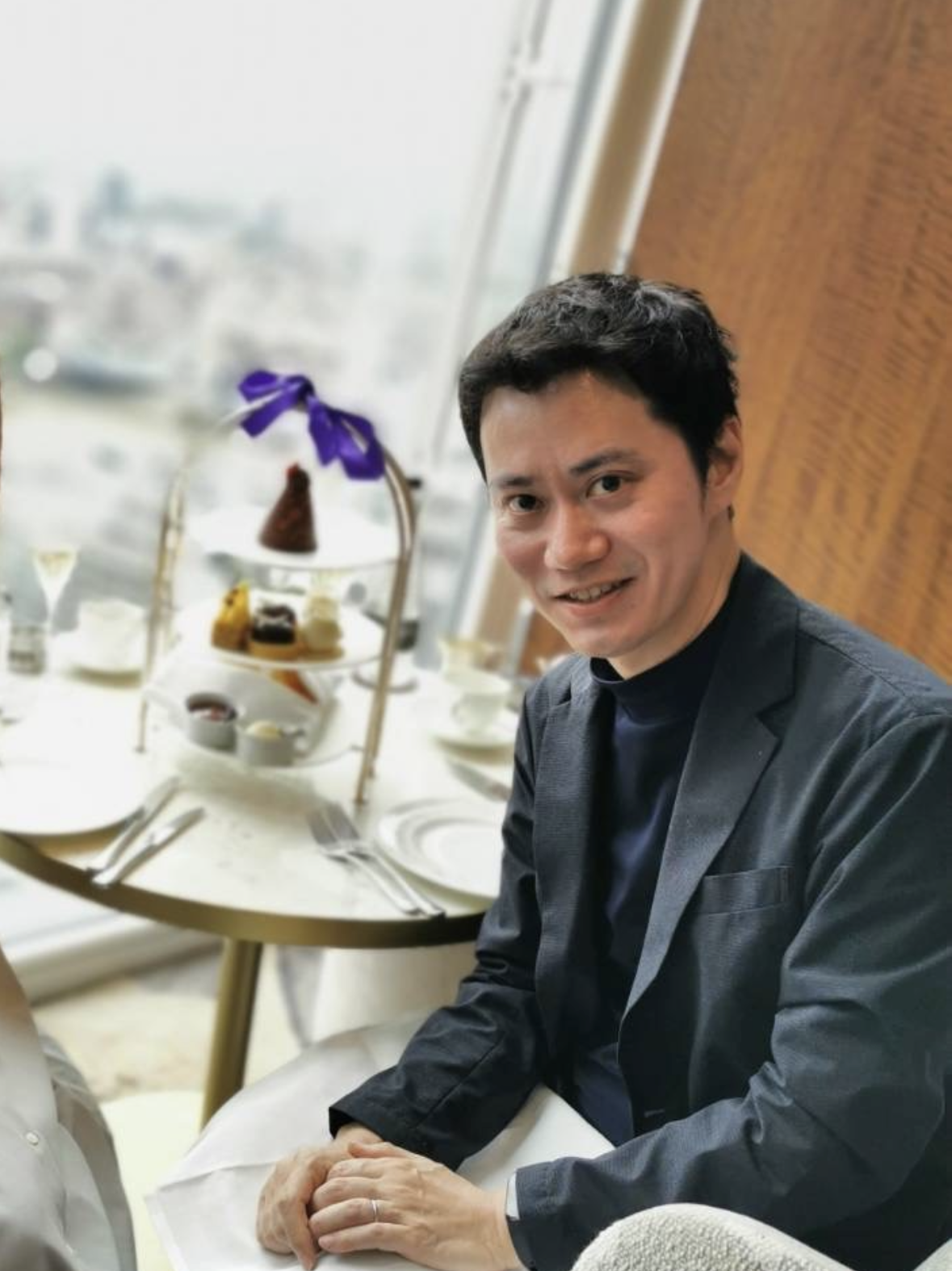
Tomoaki Nakao
Tomoaki Nakao
Founder & CEO · Blueshift Japan LLC
20+
Years at Sumitomo Corporation
$800B
Sogo shosha revenue ecosystem
5
Major trading house network

"I spent two decades watching foreign companies enter Japan. The ones that succeeded didn't just learn the language — they learned how decisions are made, who actually holds the key, and why patience is leverage, not weakness."

What is a Sogo Shosha?

Japan's five major general trading companies — Mitsubishi, Mitsui, Sumitomo, Itochu, Marubeni — collectively manage over $800B in annual revenue and sit at the operational center of Japanese industry. They are the companies that other large companies route major procurement, investment, and partnership decisions through.

Two decades inside Sumitomo Corporation means two decades at the intersection of capital allocation, industrial partnership, cross-border deal-making, and government relations — the four levers that determine how deals actually get done in Japan.

The Sogo Shosha Network — What 20 Years Inside Builds
Tomoaki
Nakao
At the center
Tomoaki
Nakao
At the center
A sogo shosha sits at the intersection of industry, capital, government, and cross-border trade. Spending 20 years as an insider means knowing which relationships open which doors — and which doors exist at all. Most foreign companies don't know the right questions to ask. We know the answers before the questions are formed.
The Origin of the Thesis

Twenty years. Three convictions.

Credentials tell you what someone did. These tell you why we see what others miss.

01
I saw how the world actually trades.
Two decades moving commodities, capital, and partnerships across borders inside Sumitomo Corporation. I watched how major economies actually make decisions — who holds power, how risk is priced, why some deals close in weeks and others quietly die in committee. That is a vantage point you cannot read about. You have to sit in the room.
02
I learned why Japan is different — and why outsiders miss it.
From the inside, I evaluated which foreign companies Japan adopts, and which it quietly rejects. The ones that failed almost never failed on product. They failed on positioning — they misread how trust is built, how consensus forms, how a "yes" is actually given. The barrier was never quality. It was understanding.
03
I realized the gap itself was the opportunity.
Japan is remarkably homogeneous — and that very sameness makes the right outside perspective extraordinarily valuable. The best foreign companies don't just sell to Japan; they bring the diversity of thought Japan needs to keep innovating. I built Blueshift to stand exactly there — between the world's best companies and the market that needs them most.
What That Means For You

Capability, not just credentials.

🏛️
Inside the Real Decision Process
Japanese enterprise procurement involves nemawashi (groundwork), ringi (approval routing), and stakeholders most foreign companies never meet. 20 years navigating this means knowing which shortcuts destroy trust and which ones build it.
🌉
The Bridge, Not the Translator
Translators convert words. Bridges convert value. We help global companies restructure their offering — positioning, pricing, partnership model — so it lands in Japan the way it was intended to, not just the way it literally reads.
🔭
Pattern Recognition Across Sectors
From commodity trade to SaaS, energy infrastructure to fintech — the surface features differ but the underlying patterns repeat. We've seen enough entry attempts to know which signals predict success before the first meeting happens.
Speed Without Shortcuts
Traditional consulting delivers depth over months. We deliver the same depth in 5–15 days because the knowledge isn't new — it's structured, on-demand access to 20 years of already-accumulated market intelligence.

Ready to understand Japan?

Start with a brief. We'll respond within 24 hours with a tailored proposal — no commitment required.

Start Your Brief →